
How 360° Virtual Tours and the Metaverse Help Showcase Temples and Attractions
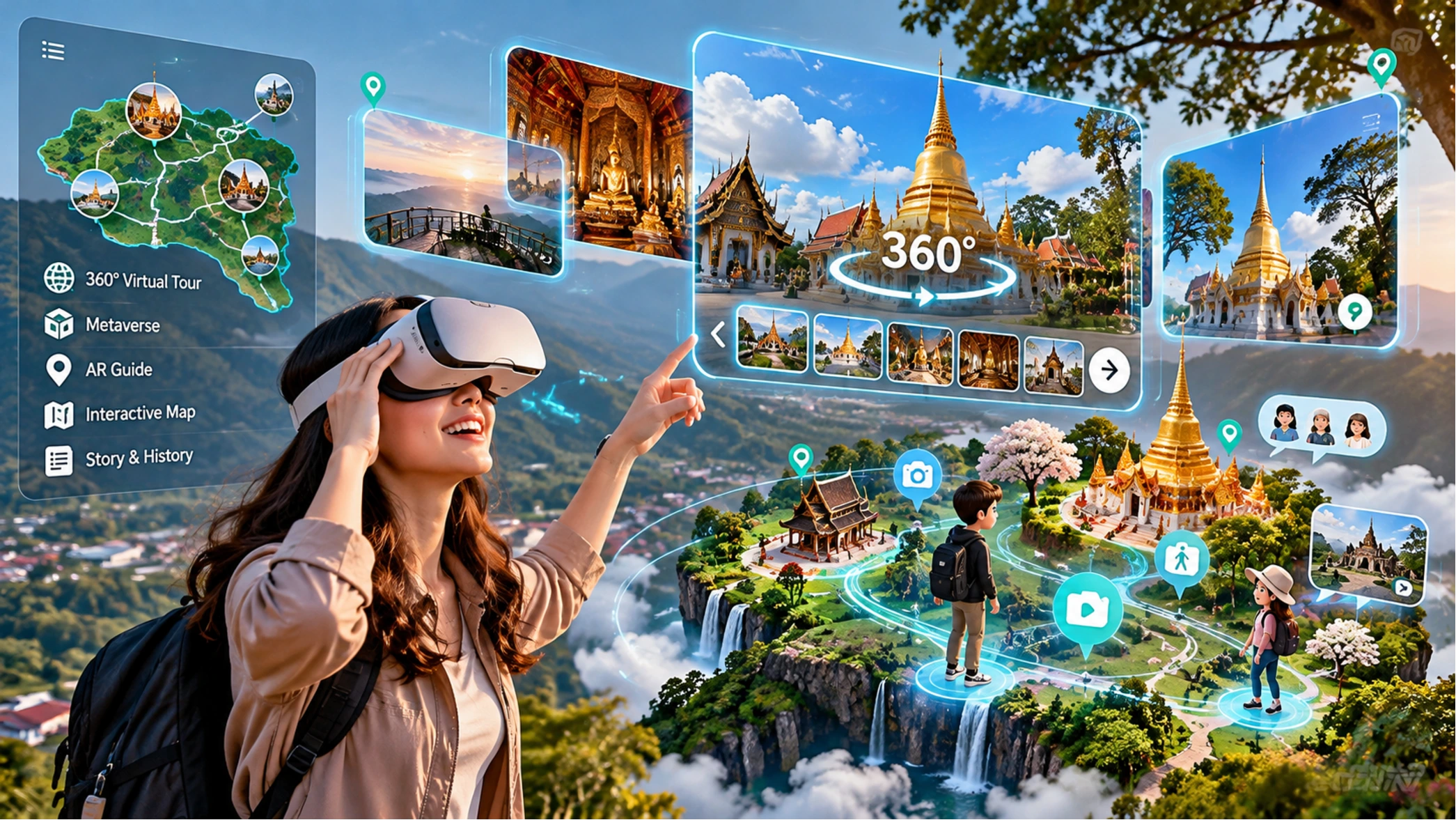
Short answer: A 360° virtual tour uses all-around photos of a real place so people can move between viewpoints on screen; it suits showing an existing place before a visit. A metaverse rebuilds the place as a 3D world people can explore freely; it suits recreating places that no longer look as they did, or building a showroom that does not exist.
Key takeaways
- 360° virtual tour = real photos, set viewpoints
- Metaverse = a built 3D world, free movement
- Helpful features: a viewpoint map, a next button, a guide character and several languages
- Both open places to people who cannot visit and make others want to see the real thing
What is a 360° virtual tour?
A 360° virtual tour links all-around photos of a real place. Viewers look in every direction and click to the next viewpoint. It runs in a web browser, so it works on computers and phones.
How is a metaverse different?
A metaverse rebuilds the place entirely from 3D models. Viewers can walk anywhere, not only where photos were taken, so it can recreate historic places or create new exhibition spaces.
- Source: virtual tours use real photos · a metaverse uses 3D models
- Movement: virtual tours follow set viewpoints · a metaverse allows free exploration
- Best for: virtual tours for existing places · a metaverse for historic places or virtual exhibitions
Features that make tours easy and engaging
- Viewpoint map: shows where you are and lets you jump to a spot
- Next button: guides viewers in order
- Guide character: tells the story of the place
- Several languages: for foreign visitors
- Interactive points: such as offering flowers or opening more information
- Day and night modes: show different atmospheres
Examples from iPANDA's work
- VR Wat Khao Lang Phatthana: a 360° tour with a viewpoint map, a next button, Thai, English and Chinese labels, and a flower-offering interaction
- VR Wat Phra That Doi Wao: a 360° tour with a route map, a Thai and Chinese guide character, and day and night modes
- Ayutthaya Verse: a 3D virtual world of ancient Ayutthaya with temples, buildings and an ordination hall interior
- iPanda Verse: a virtual showroom with booths, 3D models and AR work
What to prepare
- Goal: preview a place, tell its history, or exhibit work
- Viewpoints and stories: the key spots and the information for each
- Languages: for your main audiences
- Channels: embedded in a website, an app or screens on site
FAQ
Do viewers need a VR headset?
No. A 360° virtual tour opens in a web browser on a computer or phone.
Will a virtual tour stop people visiting in person?
It helps people see the place and plan a trip, and gives access to those who find travel difficult.
How much does it cost?
It depends on the number of viewpoints, the size of the 3D world and the features you need. The iPANDA team gives an initial estimate after a short briefing.
Talk to iPANDA
See VR & AR Development and 3D & Metaverse Development, or call +66 96 904 5454 or email ipandathailand@gmail.com.
Related case studies
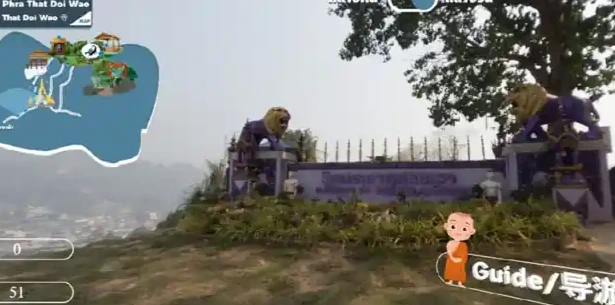
VR Tour: Wat Phra That Doi Wao
A 360° virtual tour of Wat Phra That Doi Wao with a map, an animated guide character and day/night modes.
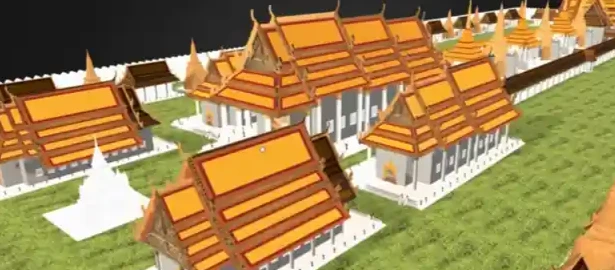
Ayutthaya Verse
Ayutthaya Verse is a 3D virtual world recreating the ancient city of Ayutthaya, where users can walk through temples, buildings and shrine interiors.
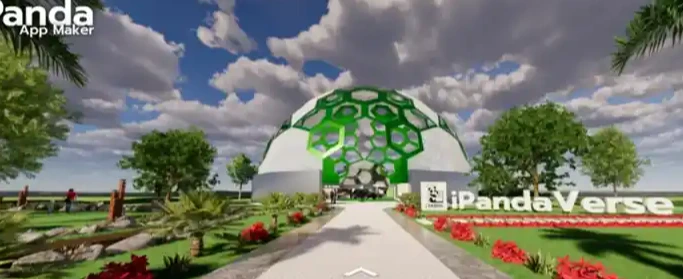
iPANDA
iPanda Verse
iPanda Verse is a virtual world iPANDA built to showcase its work, where visitors walk through booths, 3D models and AR projects.
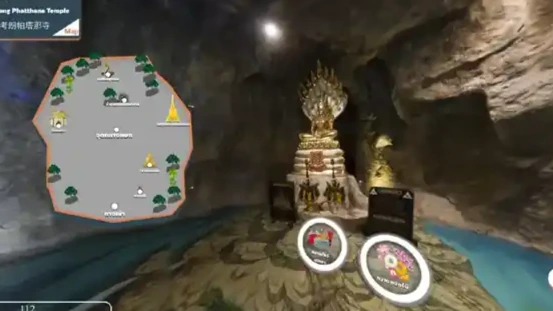
VR Tour: Khao Lang Phatthana Temple
A 360° virtual tour of Khao Lang Phatthana Temple with a map of viewpoints, next-stop navigation and labels in three languages.
Related services
VR & AR Development
iPANDA builds immersive experiences, from VR 360° virtual tours to AR apps, for tourism, learning and showcasing places.
3D & Metaverse Development
iPANDA creates interactive 3D models and virtual worlds (metaverse), such as a recreation of ancient Ayutthaya and a virtual showroom people can explore from anywhere.